Free Resource — Pickleball, Tennis & Padel Court Lighting

Better Court Lighting
Starts With Better Design.

Whether you're planning new courts, upgrading existing lighting, expanding a facility, or evaluating options for a renovation, the decisions made during the design process can dramatically impact visibility, glare, player experience, energy performance, and long-term operating costs.
No cost. No commitment. Instant access.

What You'll Learn

A comprehensive resource written for facility owners, developers, architects, and contractors — covering every dimension of pickleball court lighting, tennis court lighting, padel court lighting, and beyond.

Five Elements of Great Court Lighting

Illuminance, uniformity, glare control, color rendering, and energy efficiency — how each element affects play quality and long-term facility performance.

Indoor vs. Outdoor Design

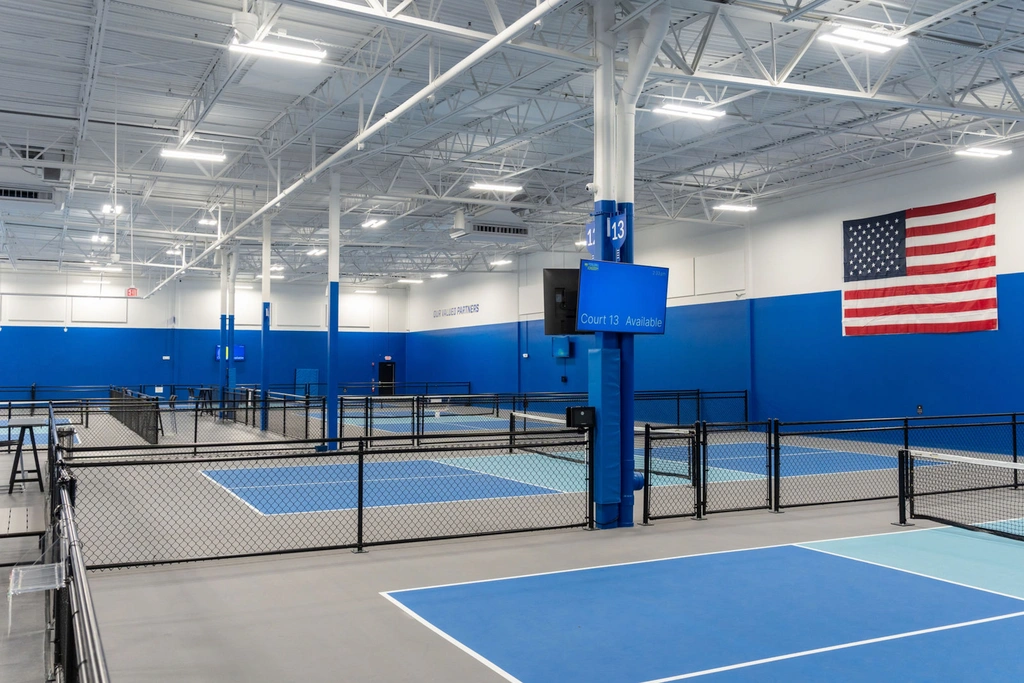
Comparing the unique engineering challenges of indoor facilities, outdoor courts, and covered structures — including ceiling heights, obstructions, and spill light control.

Photometric Studies

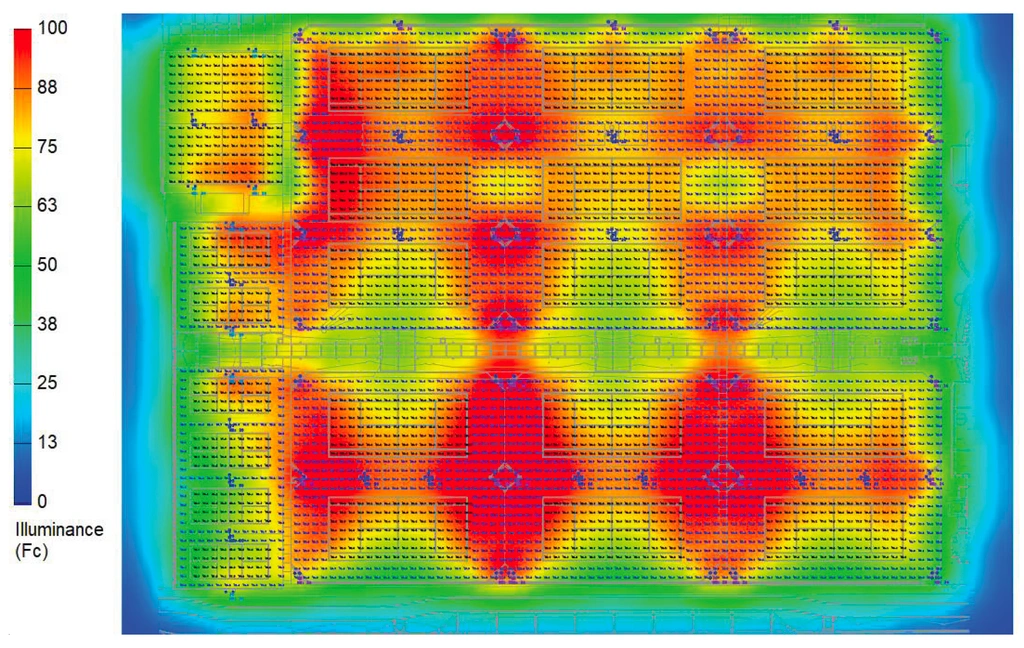
How computer-modeled photometric analysis validates fixture placement, predicts performance, and gives owners a data-backed plan before a single fixture is installed.

Common Lighting Mistakes

The most expensive errors facility owners make — from specifying fixtures before completing design to under-designing for court expansion — and how to avoid them.

Lighting Standards & Guidelines

Sport-specific illuminance and uniformity standards for tennis court lighting, pickleball court lighting, and padel court lighting — by play class, from recreational through professional and broadcast.

Manufacturer-Agnostic Design

Why the spec should drive the fixture selection — not the other way around. How to evaluate manufacturers, compare performance data, and avoid vendor lock-in.

Controls & Energy Management

Dimming, scheduling, occupancy sensing, and smart controls — how the right system reduces operating costs and qualifies for utility rebates without sacrificing player experience.

Facility Planning Considerations

Aligning lighting design with phased construction, expansion plans, utility infrastructure, budgeting timelines, and permit requirements for a complete, coordinated approach.

We Begin With the Facility.
Not the Fixture.

Energywise Court Solutions is a design-first practice. We help facility owners, developers, architects, and contractors make informed decisions that balance performance, player experience, and long-term operating economics — before any fixture is selected.

Manufacturer Agnostic

We don't sell fixtures. We design to a performance specification and then identify the best-fit products for your project — from any manufacturer.

Indoor & Outdoor Expertise

From high-ceiling indoor complexes to outdoor courts with spill-light restrictions, our team has designed for every racquet sports context and climate.

New Construction & Retrofit

Whether you're breaking ground or upgrading an existing facility, we adapt our design process to your project timeline, budget realities, and existing infrastructure.

Photometric Design & Analysis

Every project begins with computational photometric modeling — giving you verified illuminance levels, uniformity ratios, and glare metrics before you commit.

No manufacturer relationships. No kickbacks. No bias. Our only obligation is to help your facility perform exactly as designed — now and over the life of the asset.

Platform

EnergyManager

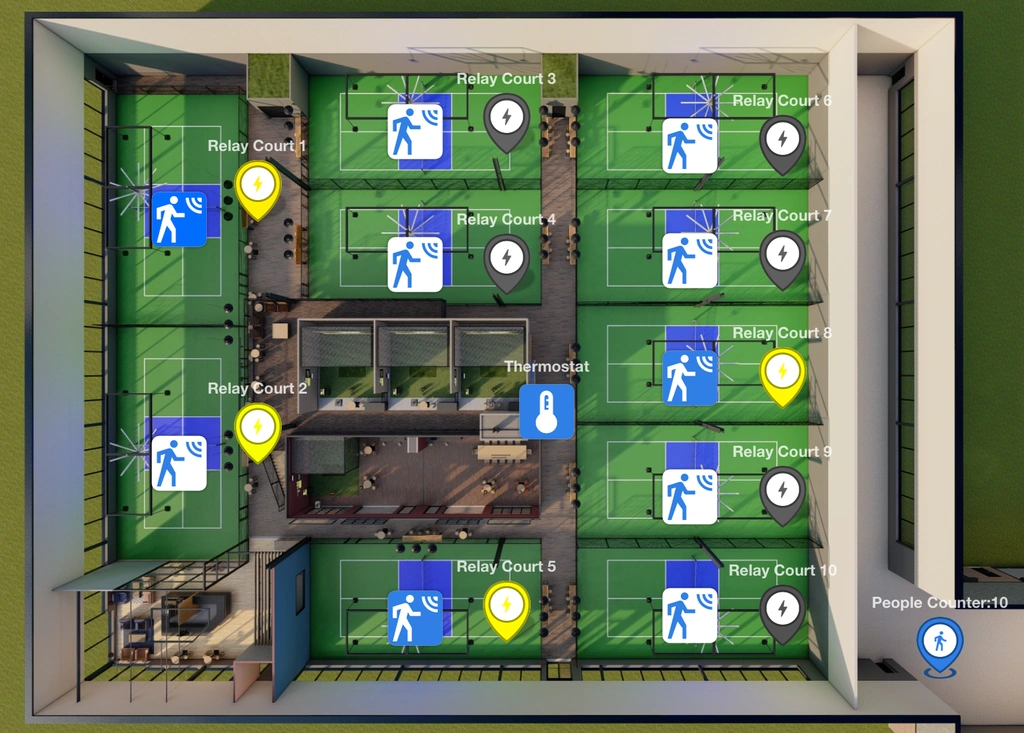
Our proprietary energy management dashboard gives facility operators real-time visibility into lighting consumption, automated scheduling, and ROI tracking — purpose-built for racquet sports facilities.
AI-Powered

EnergyEdge AI

AI-driven demand optimization that learns your facility's usage patterns, automatically adjusts lighting output across all courts, and identifies rebate and incentive opportunities you'd otherwise miss.
Designed for Decision-Makers

The guide is written and designed for facility professionals — not a marketing brochure. Dense with reference data, photometric examples, planning frameworks, and design standards you can actually use.
72 pages. Zero filler. From photometric fundamentals to facility planning frameworks — everything you need to make better lighting decisions for your project.

Download Free →

Get the Complete Lighting Guide

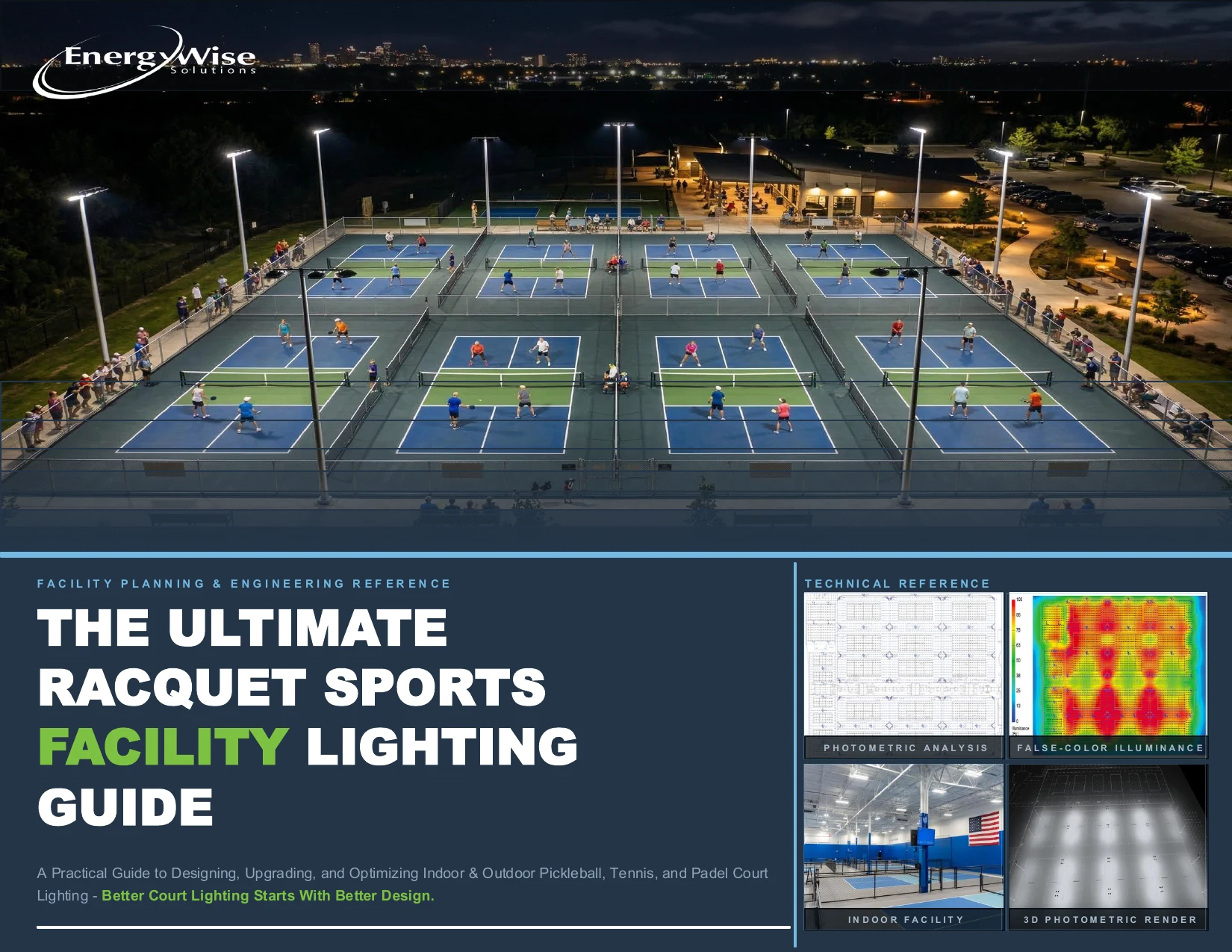
The Ultimate Racquet Sports Facility Lighting Guide is the most comprehensive resource available for planning, specifying, and optimizing court lighting for pickleball, tennis, and padel facilities.

  • Photometric design principles explained in plain language
  • IES, ITF, and USA Pickleball lighting standards reference
  • Indoor vs. outdoor design considerations by sport
  • Energy savings, controls, and rebate qualification guidance
  • Facility planning checklist for new construction & retrofits
  • Manufacturer-agnostic fixture evaluation framework

Download The Free Guide

Complete the form below for instant access.

Complimentary Service

Complimentary Court
Lighting Design Review

Not sure where to start? Our team will review your facility plans, existing conditions, or project scope and provide specific, objective feedback — at no cost and no obligation. You'll leave the conversation with a clearer picture of your options, your path forward, and what a well-designed system should deliver for your project.

No cost, no commitment
Manufacturer-agnostic perspective
Indoor & outdoor expertise
New construction & retrofit
Typically completed in 1 meeting

Frequently Asked Questions

Answers to the questions facility owners, developers, and design professionals ask most often about racquet sports court lighting.

Pickleball court lighting is typically designed to one of four play classes, each with its own illuminance and uniformity targets. Class IV (recreational) targets 20–30 fc average. Class III (club) targets 30–50 fc. Class II (competition) targets 50–75 fc. Class I (professional/broadcast) targets 75–125 fc. Uniformity is equally important: a max-to-min ratio of 2.0 or less is the general target, with premium competitive facilities aiming for around 1.7 or less. Foot-candle averages without adequate uniformity produce visible hot spots and dark zones that affect play quality and increase eye strain.

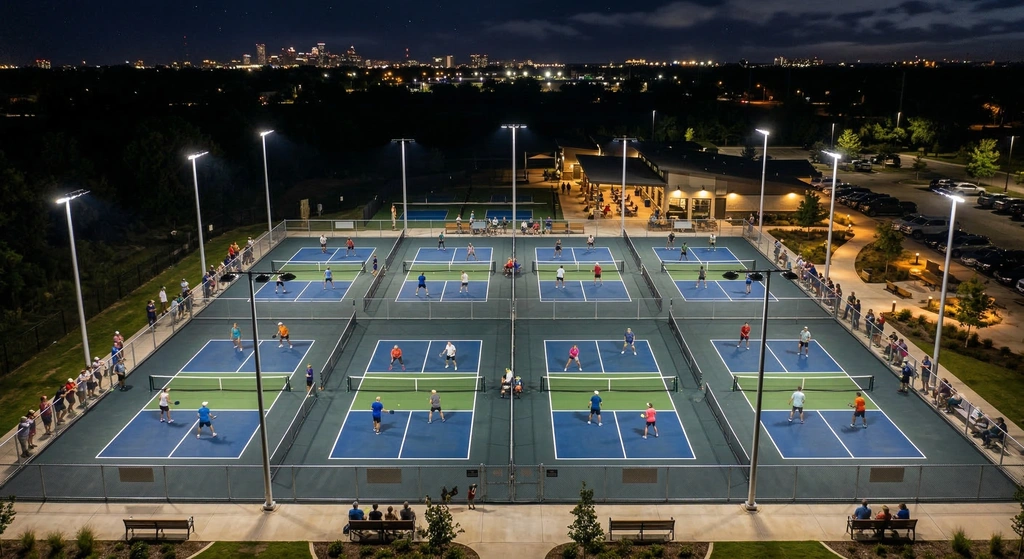
Mounting height is another critical variable. For indoor pickleball court lighting, ceiling-mounted LED systems should have a minimum clearance of 18–20 feet to avoid interference with lobs. For outdoor pickleball court lighting, pole heights of 20–25 feet are ideal for minimizing glare and providing even, consistent light across the court surface.
Tennis court lighting is organized into four play classes, each defining both an average illuminance target and a minimum illuminance floor. Class IV (recreational) requires 30 fc average / 20 fc minimum with a uniformity ratio of 2.0:1 or less. Class III (club and competitive) requires 50 fc average / 40 fc minimum at 2.0:1 or less. Class II (regional competition) requires 75 fc average / 60 fc minimum at 1.7:1 or less. Class I (national and professional events) requires 125 fc average / 100 fc minimum at 1.5:1 or less.

Mounting height also plays a significant role in tennis court lighting performance. Recreational and residential installations commonly use 20–25 ft poles to help reduce light spill. Club and competition facilities typically use 23–30 ft to achieve stronger distribution and better uniformity. Tournament and professional venues often go to 30–40+ ft to improve coverage, visibility, and uniformity across the full court at higher levels of play.
Padel court lighting guidelines are defined by use level. Recreational padel targets 200–300 lux with a uniformity ratio of 2.0:1 or less. Club and training facilities target 500–750 lux at 1.7:1 or less. Competition padel requires 750+ lux with a tighter uniformity ratio of 1.4:1 or less. Recommended mounting heights are commonly 20–26 ft above grade, with 26 ft or higher often preferred for tournament-oriented applications to improve distribution and reduce shadows on the glass walls.

Beyond the numbers, padel court lighting presents unique design challenges because of the glass enclosure structure. The perimeter walls and roof framing create mounting restrictions, shadow zones, and glare angles that require careful photometric planning specific to the court model and enclosure type. We model every padel installation in photometric software before recommending any fixture position or mounting approach.
Indoor court lighting requires balancing ceiling height, structural bays, HVAC and sprinkler obstructions, and the reflected light contribution of walls and ceilings. Glare control is particularly critical because players are looking up at fixtures during overhead shots and lobs. We evaluate the Unified Glare Rating (UGR) of any indoor specification to ensure player comfort. For indoor pickleball court lighting, a minimum fixture clearance of 18–20 ft is recommended to avoid interference with lobs. Ceiling height also drives fixture selection more broadly — low-bay facilities have fundamentally different needs than high-bay complexes with 28–35+ foot clearances.
Spill light and light trespass are governed by local ordinances and, in some jurisdictions, IES RP-6 Outdoor Sports Lighting standards. The most effective control strategies are fixture aiming angles, optic selection (full-cutoff vs. semi-cutoff housings), and pole placement relative to property lines. Photometric modeling lets us predict exactly how much light falls beyond the court boundaries before equipment is purchased. In sensitive environments — residential adjacencies, dark-sky zones, or areas with strict municipal codes — we design specifically to minimize trespass while maintaining adequate court illuminance.
For most facilities, we recommend a networked 0-10V dimming system with court-by-court zone control, scheduling automation, and occupancy sensing. This combination allows operators to bring courts up to full brightness only when occupied, dim to maintenance levels during off-hours, and create preset scenes for different programming types (recreational play, clinics, leagues, tournaments). Our EnergyManager platform layers real-time consumption monitoring and automated scheduling on top of the control hardware, giving operators a single dashboard for the entire facility.
The energy savings from replacing metal halide, HPS, or older LED systems with properly designed modern LED lighting typically range from 40% to 70% on lighting-specific energy costs. The exact figure depends on current system wattage, hours of operation, local utility rates, and how aggressively you leverage controls. With smart controls and occupancy sensing, additional operational savings of 20–35% are common. A well-designed 8-court indoor facility replacing metal halide fixtures can often achieve payback in 3–5 years, even before utility rebates are factored in.
Skipping a photometric study is one of the most expensive decisions a facility owner can make. Fixture selection without computational modeling routinely results in insufficient illuminance levels, poor uniformity, unexpected glare, shadow zones from structural obstructions, and systems that fail to meet sport-specific standards. Retrofit projects are particularly risky — the photometric assumptions that worked for your previous fixture type often don't transfer directly to LED replacements with different beam distributions. A photometric study typically costs a fraction of one fixture installation error.
Yes — and they can be substantial. Most U.S. investor-owned utilities offer prescriptive or custom rebate programs for commercial LED lighting upgrades. Rebates for sports facility lighting projects typically range from $0.05 to $0.25 per kilowatt-hour saved, and custom incentive programs for large facilities can reach five- or six-figure rebate amounts. The key is identifying rebate eligibility early in the design process, because fixture specifications and lighting levels must often meet program requirements to qualify. Our team identifies and documents rebate opportunities as part of every project.
Our complimentary design review is a working session — not a sales call. We review your facility plans, existing system documentation, or project scope and provide specific, actionable feedback on: lighting level adequacy for your intended use, design approach and fixture placement strategy, controls and energy management options, rebate qualification potential, and common pitfalls for your project type. Most reviews are completed in a single 45–60 minute meeting. There's no cost, no obligation, and no manufacturer agenda. We'll tell you exactly what we see — including if your current direction is already solid.