
Energywise Court Solutions · Padel Resource Center

Padel court lighting.
Designed around your project.

Buy the court from court experts. Design the lighting with lighting experts.

Professional guidance for facility owners, developers, players, architects, engineers, and contractors. Review the lighting design, equipment, controls, and support plan before accepting a bundled court package.

Industry experience. A player’s perspective.

We understand the court
from both sides.

Our perspective combines more than 20 years in the industry with firsthand experience as racquet-sports players. Energywise co-founders Scott and Jennifer Van Kerkhove are avid racquet-sports enthusiasts. That connection to the game informs how we approach lighting for tennis, padel and pickleball.

The right lighting system starts with what players need to see: the ball in flight, the playing surface and the space around them. We consider glare, consistent illumination and fixture placement alongside the facility’s technical requirements. Careful design, correct installation and commissioning help the finished system deliver the intended playing experience.

We bring lighting design, equipment selection and controls guidance to the project team, helping the installing contractor put the plan into practice.
Meet Scott →   Meet Jennifer →

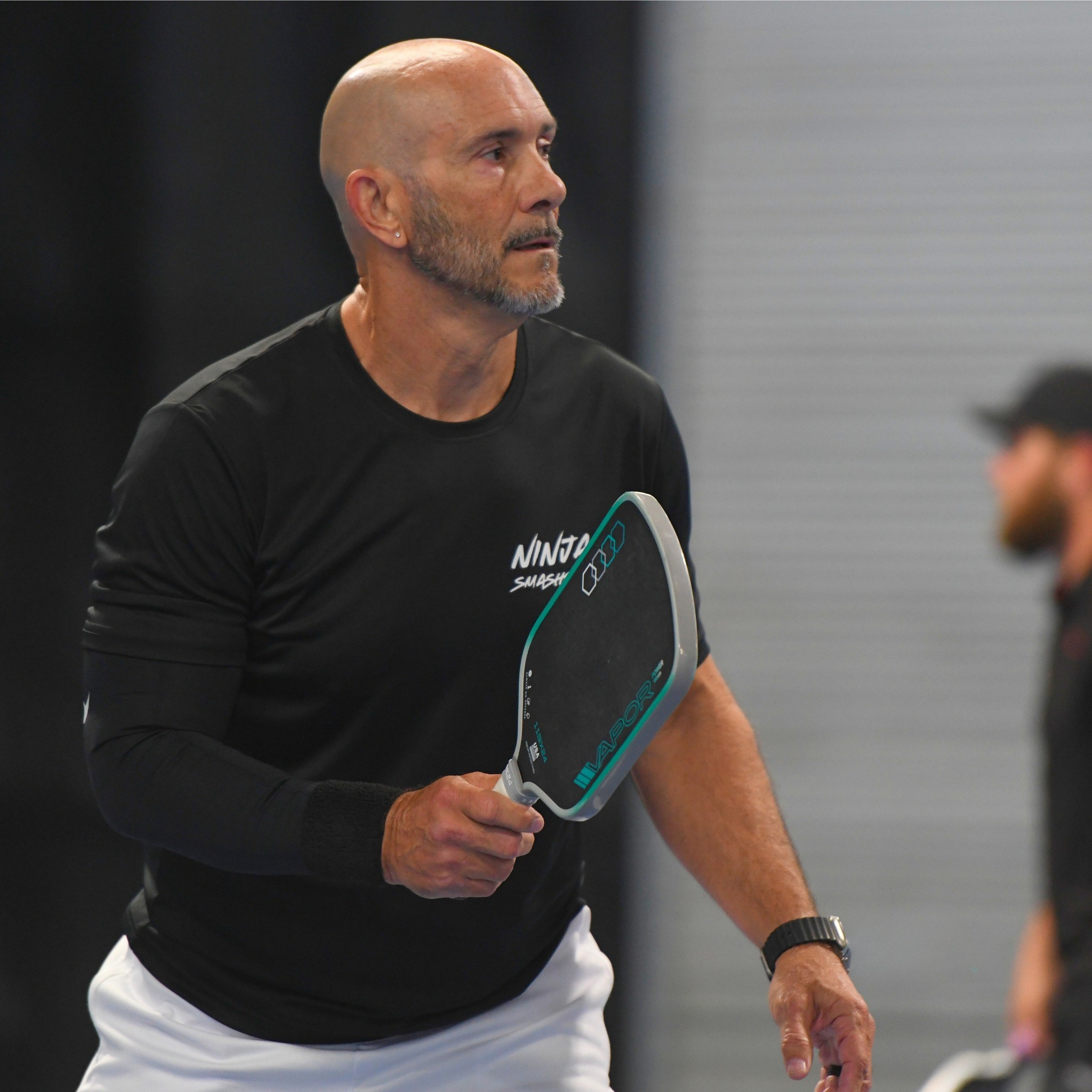
Scott Van Kerkhove on court holding a pickleball paddle
Scott Van Kerkhove on the pickleball court.
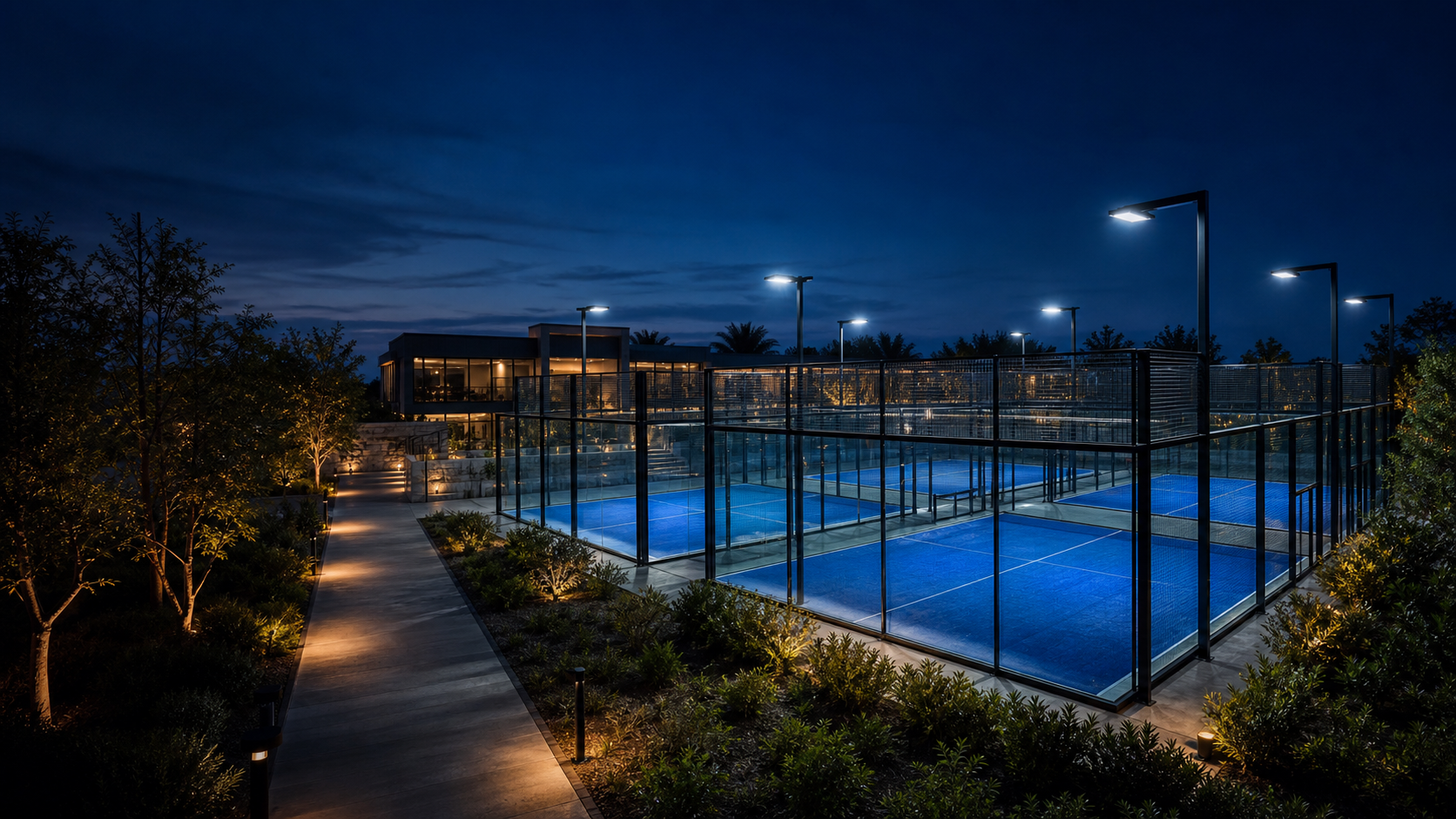
Concept illustration of glass-enclosed padel courts under nighttime lighting
Concept imagery from the padel resource library; not a completed Energywise project or a fixture-specific lighting simulation.

For the padel project team

Start with the questions that matter to your role.

01

Players + club leaders

Understand how visibility, glare, uniformity, color quality, and reliable operation affect the way a padel court feels and plays.

Explore lighting fundamentals ↓

02

Owners + operators

Evaluate energy use, scheduling controls, service access, warranty ownership, replacement parts, and the true cost of court downtime.

Plan for reliable operation ↓

03

Developers + facility founders

Separate the court and lighting scopes early enough to compare performance, budget, procurement, support, and long-term value.

Review the buying decision ↓

04

Architects + engineers

Coordinate photometrics, mounting, electrical requirements, controls, site conditions, and design intent before the system is locked.

See the design-first path ↓

Use the resource center at any stage.

Lighting fundamentals

Six decisions that shape court performance

Photometrics, glare, environment, LED technology, electrical coordination, controls, support, and warranty.

Explore this topic →

Procurement

Why the court and lighting deserve separate review

Learn where the court manufacturer’s responsibility ends and the professional lighting scope begins.

Explore this topic →

Operations

The real business cost of lighting downtime

See how support distance, parts availability, warranty logistics, and service coordination can affect court revenue.

Explore this topic →

Project planning

A better path before the court order is final

Use Energywise’s design-first process to preserve options and coordinate the lighting with the wider facility.

Explore this topic →

Buyer checklist

Seven questions to ask before accepting “lights included”

Pressure-test the bundled proposal before fixtures, controls, mounting, electrical scope, and support are committed.

Explore this topic →

Two coordinated disciplines

Keep the court expertise. Add lighting expertise.

Bundled does not automatically mean designed for your project. An independent review can confirm the included lighting—or identify gaps while changes are still practical.

The court specialist

Structure, glass, mesh, turf, enclosure, play geometry, and court assembly belong in the court scope.

The lighting specialist

Photometrics, glare, uniformity, optics, aiming, electrical coordination, controls, documentation, and the lighting support path need a defined scope of their own.

Work alongside your selected court manufacturer, architect, engineer, contractor, and owner. Compare the lighting evidence before deciding whether to retain the included equipment or select another approach.

Design before equipment

Six lighting decisions deserve focused review.

01

Photometric design

Light levels, uniformity, glare, aiming, and dark zones must be modeled for the actual courts—not assumed from fixture wattage.

02

Project environment

Indoor ceilings, outdoor conditions, mounting constraints, nearby properties, cameras, and player expectations all change the design.

03

Current technology

LED performance, optics, drivers, thermal management, and control capabilities continue to evolve. Selection requires lighting-market expertise.

04

Electrical coordination

Voltage, circuiting, mounting, switching, code requirements, and installation responsibilities must align with the U.S. project.

05

Controls integration

Court lighting may need to connect with scheduling, dimming, energy management, facility automation, or an existing controls platform.

06

Support, parts + warranty

A dependable plan identifies who answers the call, processes the claim, supplies replacement components, and helps restore play when something fails.

Equipment selected around the court

A linear approach for indoor padel lighting.

Our Linear Court Fixture offers corner, surface, pendant, and continuous-row mounting options. Those choices give the design team ways to work with the court geometry and available mounting surfaces.

Evaluate placement, aiming, player sightlines, court spacing, and control zones in the photometric design. A fixture’s output alone does not establish the performance of the completed court.

  • 4-foot and 8-foot options for layout planning.
  • 0–10 V dimming to coordinate with compatible controls.
  • Mounting kits and suspension hardware confirmed for the selected configuration.

The Linear Court Fixture is intended for indoor use only, including indoor padel courts. It is not suitable for outdoor court installations.

Explore the linear fixture for padel →

Compare all court lighting approaches →

Linear Court Fixture product illustration
Fixture illustration from the supplied specification sheet.

Other indoor approaches

Compare indirect-panel, flat-panel, and round fixtures around the ceiling, sightlines, and intended lighting plan.

Compare indoor fixtures →

Outdoor padel projects

Review outdoor equipment, pole and mounting conditions, aiming, surrounding properties, and controls as part of the site design.

Compare outdoor fixtures →

Operations, parts and accountability

Plan the support path before a court needs service.

Lighting downtime can disrupt reservations, leagues, events, and maintenance schedules. Before purchase, establish who diagnoses a problem, handles the claim, supplies the correct part, and coordinates the return to service.

Cross-border support considerations

  • Language, time zones, work schedules and holidays.
  • Technical diagnosis and warranty ownership.
  • Replacement fixture, driver and controls availability.
  • International freight, customs and local service coordination.

A defined U.S.-based support plan

  • Identify the lighting and technical contact.
  • Document the warranty and claim process.
  • Review replacement components and critical spares.
  • Coordinate with the facility and local project team.

Imported equipment is not automatically unsuitable. The aim is a clear support plan for the equipment you choose, with availability, service responsibilities, and warranty terms confirmed for the project.

The Energywise approach

Bring the lighting team in before the order is final.

Engage early

Bring Energywise into the conversation before the court order and bundled lighting selection are finalized.

Separate the scope

Ask the court supplier for a court-only price or a clear lighting credit so the lighting can be evaluated independently.

Design for the site

Establish performance goals and model the actual court arrangement, mounting conditions, surroundings, and level of play.

Coordinate the system

Select fixtures, optics, electrical requirements, and controls that work with the facility and the broader project team.

Support the investment

Define the documentation, commissioning, warranty responsibilities, replacement-parts options, and future service path as part of the agreed project scope.

Buyer checklist

Seven questions before accepting “lights included”.

  1. Who designed the lighting—and are they a professional lighting resource?
  2. Was a photometric study created for this exact site and court layout?
  3. How were glare, uniformity, mounting, and surrounding conditions addressed?
  4. Will the electrical requirements coordinate with the U.S. project?
  5. Can the system connect to the facility’s controls or automation platform?
  6. Who owns the lighting warranty, claims, parts, and technical support?
  7. What lighting alternative was considered before accepting the bundle?

Related guide

Build a stronger technical foundation.

The Racquet Sports Facility Lighting Guide covers indoor and outdoor planning, photometric studies, light levels, glare, uniformity, controls, and manufacturer-independent evaluation for tennis, padel, and pickleball.

Open the Racquet Sports Facility Lighting Guide ↗

Opens in a new tab so you can keep this resource center open.

Frequently asked questions

Questions about padel lighting packages.

Why not simply accept the lights included with the court?

Because inclusion answers a purchasing question, not a design question. The lighting still needs to be evaluated for the actual environment, level of play, photometric performance, electrical system, controls, warranty, and long-term support.

Is the concern only with overseas court packages?

No. Lighting should be treated as a separate professional discipline regardless of court origin. Overseas packages can add distance, documentation, service, logistics, and warranty considerations that make an independent lighting review useful.

Can Energywise work with the court manufacturer we selected?

Yes. The goal is not to replace the court manufacturer. It is to let the court specialist focus on the court while Energywise designs and supports the lighting scope in coordination with the manufacturer, architect, engineer, contractor, and owner.

When should Energywise become involved?

Before the lighting bundle is accepted and before mounting, electrical, and controls decisions are locked. Early involvement preserves alternatives and makes coordination easier.

What if the included lights turn out to be appropriate?

That is useful to know. Energywise can review the evidence without a predetermined manufacturer outcome. The important point is that the lighting earns approval based on the project—not merely because it was packaged with the court.

Why does a U.S.-based support path matter after installation?

When a fixture, driver, control, or component needs attention, time zones, language, work and holiday schedules, international shipping, customs, and unclear warranty ownership can add complexity. Plan a U.S.-based technical contact, warranty responsibilities, and parts and service options before purchase. Availability and response times depend on the selected equipment and agreed support scope.

Schedule a padel lighting consultation

Bring your plans, questions, or court proposal.

Start with the court proposal and lighting allowance, project location, court count, indoor or outdoor setting, mounting conditions, operating schedule, and controls needs. Energywise can help define what the lighting scope should address before equipment is committed.

Schedule a padel lighting consultation ↗

Opens the Energywise consultation scheduler in a new tab.

Prefer to start with a question? Contact us →

Tell us what you’re planning.

A new space. An upgrade. A national rollout.